
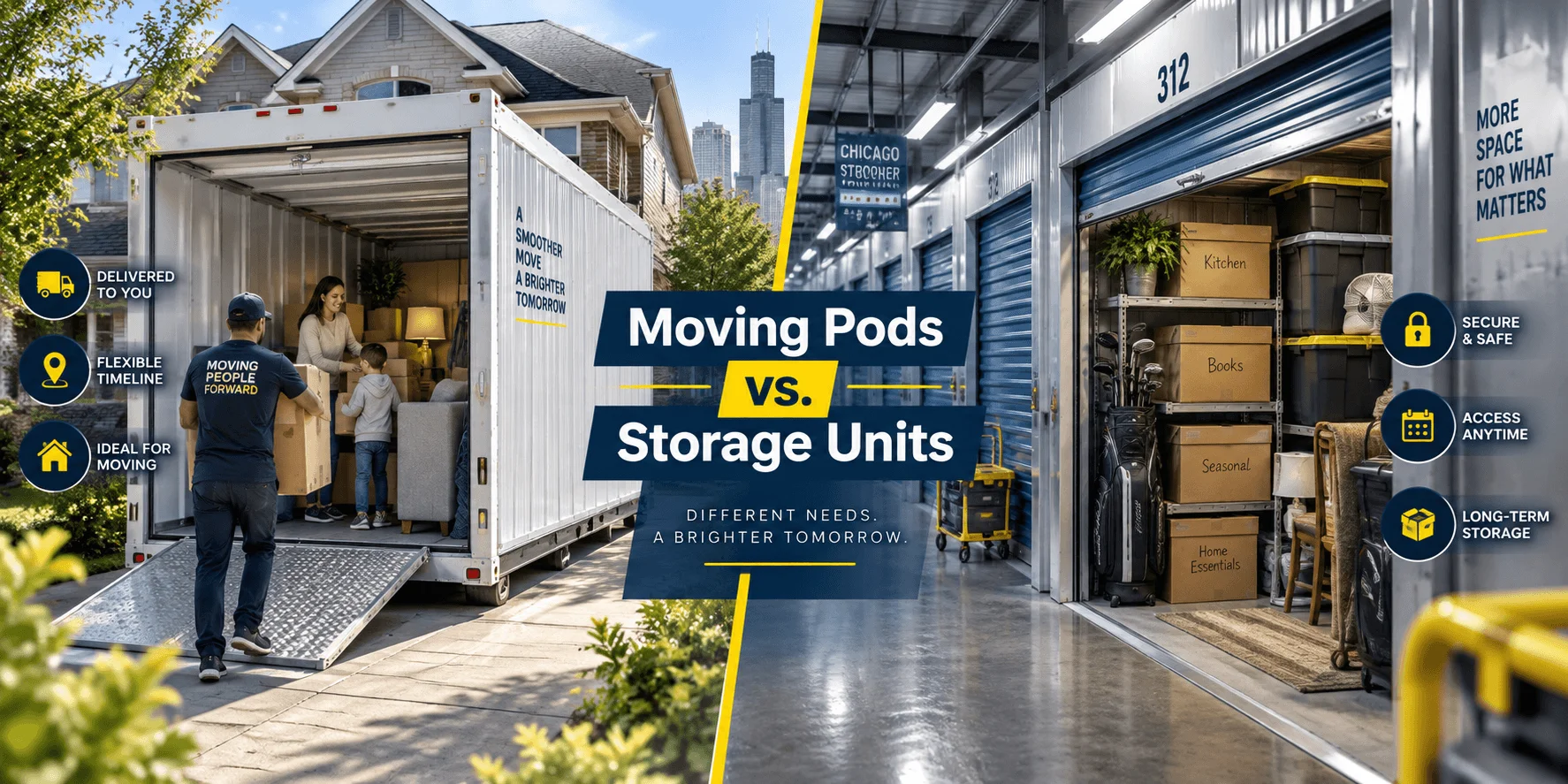
Homeowners often need extra space during a move. Whether you’re downsizing your home, staging your house for sale, or waiting for the keys to your new place, storage can help make the transition smoother. Both moving pods and storage units offer a practical solution by providing a safe place to keep your belongings while you manage the logistics. However, since each option comes with different advantages, deciding which one is the right fit for you can be challenging. In this blog, we’ll look at the pros and cons of moving pods vs. storage units to help you decide which option can make your move easier.
What are the Benefits of Moving Pods?
Portable On Demand Storage (PODS) units are large, rectangular containers that are delivered to your home. They are available in different sizes, depending on the size of your house. You can rent them for a set period of time, sometimes for up to six months, depending on your moving schedule. When you’re ready to move, the company picks up the pod and delivers it to your new home. After you finish unloading your belongings, the company comes back and takes the pod away. Moving pods offer several benefits, such as:
- Convenience: The container is delivered directly to your home and can stay there while you pack, giving you more time to move at your own pace.
- Accessibility: Since the pod stays at your home, you can get to your belongings whenever you need them. You do not have to drive to a storage facility because everything is right outside your house.
- Security: Pods are made from strong steel and are designed to protect your belongings from the weather. You use your own lock, so only you can open the container.
- Ease of Use: You do not have to arrange a moving truck or manage transportation yourself. The company handles the pickup and delivery for you. If your move takes longer than expected, the pod can also be stored for a longer period.
Finally, unlike storage units, moving pods only need to be loaded and unloaded once. Instead of making several trips between your home and a storage unit, moving pods can save you both time and effort.
What are the Downsides of Moving Pods?
While moving pods are certainly helpful, they may not be the right fit for everyone. There are a few drawbacks to consider before renting one.
- Legal Restrictions: Some neighborhoods and HOAs do not allow moving pods because they can block driveways, take up parking space or affect the view.
- Costs: Renting a moving pod for a long time can become more expensive than using a storage unit. If the pod is too large for your driveway, you may also need to pay for a parking permit to keep it on the street.
- Effort: Moving pods give you the freedom to load and unload at your own pace but the company does not help with packing. Homeowners have to lift, carry and load their belongings themselves.
- Lack of Climate Control: Moving pods do not have air conditioning, so they may not be suitable for items that can be damaged by very hot or cold temperatures. This includes artwork, antiques, photographs, electronics and delicate fabrics. Even wooden furniture can crack or lose its shape when exposed to high heat.
Keep in mind that when you rent a moving pod, you’re responsible not only for loading your belongings, but also for securing them properly. While these companies are usually careful, even a relatively minor bump can cause heavy objects to tip over. Along with researching packing strategies, homeowners also need to invest in moving supplies such as straps and blankets to fill gaps, prevent shifting and keep their belongings safe during transit.

What are the Benefits of Storage Units?
A storage unit is an enclosed space that individuals or businesses can rent. Most storage units are located indoors as part of a larger warehouse. Outdoor units are also available and many storage facilities offer both options. Most units are rented on a month-to-month basis, but many facilities offer discounts to customers who agree to long-term contracts. People normally choose storage units for:
- Enhanced Security: Customers buy their own lock for the storage unit, just like with moving pods, so only they can access their belongings. Storage units also often include extra security features such as cameras, alarms and fencing to help protect items day and night.
- Climate Control: Climate-controlled storage units are available for belongings that may warp, crack or become damaged by moisture or extreme temperatures.
- Frequent Access: Storage facilities are often located near major urban areas and may only be a short drive from your home, making it easy to get your belongings when needed. They are also useful for storing seasonal items such as decorations and sports equipment.
- Affordability: Storage units can usually be rented for a long time at a reasonable cost, making them a practical option for people who need extra storage space.
Compared to moving pods, storage units come in a wider range of sizes. Some are as small as a closet, while others can hold the belongings from an entire house. Because moving pods offer fewer size options, with the smallest being large enough to hold the contents of a studio apartment, customers sometimes end up paying for space they don’t need—a less common concern with storage units.
What are the Downsides of Storage Units?
Although traditional storage facilities are more common and widely used than moving pods, they also have a few disadvantages. Homeowners who rent storage units often mention:
- Transportation: Renting a storage unit means your belongings have to be loaded and unloaded twice, once at home and again at the facility. If you’re waiting to move into a new home, you may even have to repeat the process later. In addition to transporting your belongings, many moving companies also operate storage facilities, so you can rely on your moving crew to help move items in and out of the unit.
- Limited Hours: While some storage facilities offer 24-hour access, most only allow you to pick up or drop off items during set business hours, 6 a.m. to 10 p.m. for example
- Fees: Many of the most convenient and useful features of storage units, such as climate control, 24-hour access and drive-up access, are considered premium benefits and require an extra monthly payment.
Storage units can also be challenging if you’re relocating over a long distance. You’ll need to choose a convenient location and make arrangements with the facility manager before heading to your new hometown. For this reason, many homeowners choose one of the storage options offered by their moving company. Based on the weight and volume of your shipment, a good agent can help you select the right unit and coordinate the loading and transportation.
Moving Pods vs. Storage Units

Moving pods and storage units are both practical and convenient options, and each has its own benefits. Most people choose moving pods when they:
- Need storage for a short period
- Prefer convenience over cost
- Want to reduce the effort involved
On the other hand, homeowners usually choose storage units when they:
- Need to store belongings for a longer period
- Want frequent access to their belongings
- Want to keep storage costs lower
Before making your final decision, take a look at the items you plan to store. Think about how valuable they are and whether they can be affected by heat, cold, or moisture. Consider how long you’ll need storage and how often you’ll want to access your belongings. Also, keep your budget in mind. Once you have these answers, it will be easier to choose the option that works best for you.
Your Trusted Moving and Storage Partner in Chicago
At STI Moving & Storage, we understand that moving schedules don’t always go as planned. That’s why we offer both long-term and short-term storage services, giving you the flexibility to pack and move at your own pace. Our moving coordinators help keep the entire process smooth from start to finish. Make your move less stressful and easier to manage. Contact us today for a free quote!


