
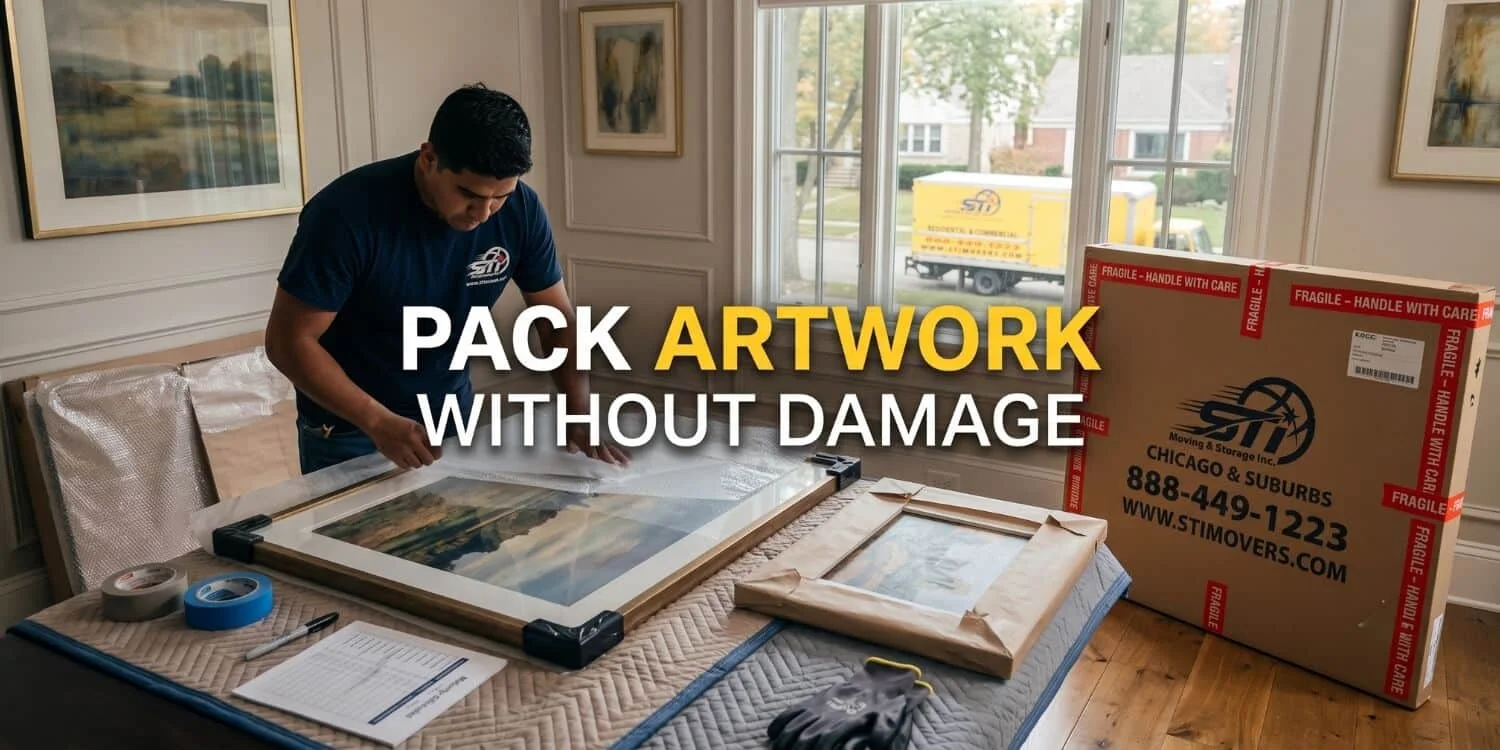
Preparing Different Artworks for Moving in Chicago
Packing artwork for a move needs a little more attention than packing regular household items. Picture frames can get chipped, glass can break and delicate materials like canvas or fine paper can be damaged by pressure or sudden temperature changes. Even if a piece looks strong, it can still be easily damaged while being moved.
The good news is that you can move most artwork safely if you use the right packing materials and take your time. In this guide, you’ll learn simple ways to prepare, pack, and unpack your artwork so it stays protected during the move and arrives in good condition, ready to be displayed again.
Key Takeaways
- Use packing materials like glassine or acid-free paper, bubble wrap, corner protectors and strong boxes to keep your artwork safe.
- Don’t place newspaper directly on artwork because the ink can leave marks.
- Pack framed artwork standing upright instead of laying it flat to help prevent damage.
- Take artwork off the wall a day or two before moving so it has time to adjust.
- Clearly label the boxes so everyone knows they contain fragile items.
- If you have very large or valuable artwork, getting extra help can be a good idea.
Essential Packing Materials
Packing artwork is all about adding layers of protection. Each material helps in a different way, whether it’s keeping the surface clean, supporting the edges or cushioning the frame.
Glassine or acid-free paper creates a protective barrier to help prevent scratches. Bubble wrap adds cushioning, while foam sheets or cardboard help spread pressure more evenly. Corner protectors keep the most vulnerable parts of frame safe and sturdy boxes or mirror boxes provide upright support during the move. Once the artwork is packed, moving blankets offer extra protection, especially while loading and transporting it.
Using the right materials from the beginning makes the whole packing process feel easier and more manageable.
Preparing Artwork before You Pack
A few simple steps before you start packing can make a big difference later.
Take Stock and Document
Before you wrap anything, take photos of each piece and make a simple list with its description and size. This helps you stay organized and gives you a clear record if you need to check anything later.
It’s also a good way to slow down and make sure nothing is packed in a rush.
Take Artwork Down Early
Taking artwork off the wall a day or two before packing gives it time to adjust to the room temperature. This can be especially helpful if you’re moving between places with different climates.
Keep the artwork in a safe, low-traffic area where it won’t get bumped or damaged while you pack the rest of your belongings.
Clean Gently
Lightly dust the frames with a soft, dry cloth. If the glass needs cleaning, use a small amount of cleaner and make sure it’s completely dry before wrapping it.
Avoid using any liquids directly on the artwork. Clean and dry pieces are less likely to get scratched once they’re packed.
Packing Framed Artwork with Glass
Framed pieces need a bit of extra attention but the process doesn’t need to feel complicated.
Add a Protective Front Layer
Whether your piece is framed with plexiglass or glass, the goal is the same: protect the surface from scratches and pressure. Start by placing glassine or acid-free paper over the front of the artwork, making sure it covers both the glazing and the frame. Secure it on the back so nothing comes into direct contact with the front.
This creates a clean barrier between the artwork and any padding, which is especially important for plexiglass because it scratches more easily than traditional glass.
Cushion the Frame
Wrap the piece in a few layers of bubble wrap, with the bubbles facing outward. Add extra padding around the corners, as they’re the most likely part of the frame to take an impact during handling.
Keep the tape on the back of the frame so the front surface stays clean and free from pressure.
Optional Extra Support for Glass Frames
If a piece is framed with traditional glass, adding a small X with painter’s tape across the glass can help hold it together if it cracks during the move. This step isn’t meant to prevent the glass from breaking but to help reduce damage if something shifts during transport.
If you use this method, keep the tape off the frame itself and remove it carefully after unpacking.
Protect the Corners
Corner protectors add an extra layer of protection. They help absorb small bumps and reduce the chance of the frame edges chipping during handling.
Packing Canvas Artwork without Glass
Canvas artwork doesn’t have glass to protect, but the surface itself still needs care.
Cover the Canvas Surface
Place glassine or a clean plastic sheet over the front of the canvas. Secure it to the back of the stretcher bars so nothing comes into direct contact with the painted or printed surface.
This helps keep dust, moisture and accidental contact away.
Wrap Lightly and Secure From the Back
Wrap the canvas in bubble wrap or foam sheets, keeping the pressure light and even. The tape should only be attached to the back or the stretcher bars, never the canvas itself.
Canvas doesn’t need heavy padding, just enough to keep it properly supported.
Support Edges and Corners
Corners and edges benefit from a little extra protection. Using corner protectors or placing rigid cardboard between stacked canvases helps prevent the frames from denting or warping.
When Artwork Needs a Little Extra Care
Some pieces naturally require a slower, more thoughtful approach.
Larger or Awkward-to-Handle Pieces
Oversized artwork can be difficult to move simply because of its size. If a piece feels awkward to handle once it’s wrapped or if you’re concerned about moving it through tight spaces, having extra help can make the process easier and less stressful.
Meaningful or One-of-a-Kind Artwork
Artwork with significant monetary or sentimental value often deserves a little extra care. In these situations, professional packing isn’t about being alarmed—it’s about peace of mind and respecting the importance of the piece.
Acrylic or Plexiglass Frames
Acrylic doesn’t shatter like glass but it scratches more easily. Placing a soft protective layer directly over the surface and avoiding too much pressure usually helps keep these pieces in good shape during a move.
Unpacking Without Rushing
Once everything arrives, give your artwork a little time to settle before unwrapping it. Letting the pieces adjust to the new environment helps reduce the risk of issues caused by sudden changes in temperature or humidity.
When you’re ready to unpack, take your time. Remove the tape and wrapping carefully, and inspect each piece as you go. Keeping the packing materials can also be helpful for future moves or storage.
Moving Your Artwork with Confidence
Packing artwork doesn’t have to feel overwhelming. With the right materials, gentle handling and a little extra time, most pieces can be moved safely without issue. Protective paper, proper padding, upright packing and thoughtful preparation all go a long way in helping your artwork arrive safely in its new space, ready to be displayed just as thoughtfully as before.
If your artwork is especially valuable, meaningful or difficult to move, getting extra support can be a practical choice. One way to make sure your artwork is packed properly is to hire a professional packing service, allowing experienced movers to handle your artwork while you focus on the logistics and other important parts of your move.

After investing in a piece of art, it’s worth investing in the right packing and experienced Chicago movers to help protect it. In the end, the peace of mind that comes from knowing your artwork is in good hands is often worth far more than saving a little money and worrying whether everything was packed or handled the right way.
FAQs
Can I use newspaper to wrap artwork?
It’s best not to. Newspaper ink can transfer onto artwork and paper surfaces, leaving stains that are difficult or even impossible to remove. Instead, use glassine or acid-free paper.
Should artwork be packed flat or standing up?
Framed artwork should always be packed standing upright, not flat. Keeping it upright reduces pressure on the glass and frame, helping lower the risk of damage.
How do I pack a large canvas painting?
Cover the canvas with protective paper, wrap it with padding and support it with rigid materials. If the piece is especially large or valuable, professional packing is often the safest option.
Do I need insurance when moving artwork?
If your artwork is valuable, insurance is highly recommended. Check whether your current policy covers artwork during a move or if you need additional coverage for transportation.


