Packing for your move yourself is a big job, whether it’s across town, across the country or even to another country altogether. One major benefit of DIY packing is the amount of money you can save but trying to do it the right way can feel overwhelming. With that in mind, here are some useful checklists and packing tips to help you handle the process yourself, making it easier to unpack and get organized quickly in your new home.
Preparing for Your DIY Packing
Since you’ll need sturdy packing boxes in a range of sizes, relying only on cardboard boxes from family and friends may not be enough. It’s a good idea to invest in professional packing materials, such as:
- Professional-quality moving boxes in different sizes
- 2” packing tape
- Masking tape
- Tissue paper
- Scissors
- Packing paper — this should be plain newsprint paper, as ink from regular newspapers can rub off on your items
- A utility knife
- Permanent markers
Once you have these supplies ready, it’s time to move on to the next phase: Packing on a schedule.
Packing Tip #2: Pace Yourself
One common mistake people make when packing on their own for a move is waiting until the last minute, when the moving truck is about to arrive—or even worse, when it’s already being loaded. Your packing should be completed the night before moving day, leaving out only the essential items you’ll need in the morning and immediately at your new home. These items can be packed separately in luggage, just as you would for an overnight trip.
Use these tips to get everything done on time:
- Use a calendar to plan what to pack and when, as packing usually takes longer than you expect.
- Start with items in storage areas such as the attic, since they are often already boxed and mostly ready to move. Next, pack out-of-season items like winter coats.
- Pack one room at a time to stay organized and work more efficiently.
- Set up a work area in each room being packed so you always know where your supplies are.
- Organize packed boxes not only by room but also by weight to make loading the truck easier.
- Keep packed cartons under 50 lbs. While it may be tempting to add more items to save space, the box still needs to be safe and easy to lift.
For certain items, it’s best to leave the packing to professional movers. This is especially true for valuable, bulky and/or fragile belongings, such as:
- Glass tabletops, heavy wall ornaments or shelves
- Wall mirrors that are 40” × 60” or larger
- Pianos and billiard tables
- Large statues, trophies, chandeliers and similar items
- Major appliances
Boxes and Packing Materials from STI Moving & Storage
We’ve already mentioned how important it is to use the right containers and packing materials, even for a DIY move, as the supplies you choose play a key role in keeping your belongings safe and well organized. STI offers all the packing boxes and cartons you may need, including:
- Dishpack or China Barrels for fine china, glassware and crystal
- Wardrobe cartons – These make it easy to move the contents of your closet and include a built-in hanging bar for clothes on hangers
- Mirror cartons – These adjustable cartons come in various sizes and help protect framed pictures, diplomas, mirrors and other flat glass items
- Mattress cartons – Available for king/queen, double, twin (single) and crib-size mattresses, with separate cartons for box springs
- Double-wall cartons that provide extra protection for breakable items such as china, pottery and crystal
- 5 cu. ft. cartons – Ideal for small but heavy items like books and DVDs
- 0 cu. ft. cartons – A useful medium-size carton for toys, pots and pans, and small appliances
- 5 cu. ft. cartons – Perfect for bulky yet lightweight items such as towels and linens
- 0 cu. ft. cartons – Suitable for large, bulky items like lampshades and pillows
- Stretch wrap – A clear plastic “cling wrap” used to cover furniture and protect it from stains, snags and other surface damage
DIY Packing Techniques
Our Packing Guide provides room-by-room instructions for packing, but these general packing tips apply to any room:
- Place loosely crumpled plain newsprint paper at the top and bottom of boxes to add extra cushioning.
- Pack the largest and heaviest items first then add smaller items, filling empty spaces with loosely crumpled packing paper.
- Wrap breakable items in tissue paper or newsprint before placing them in boxes.
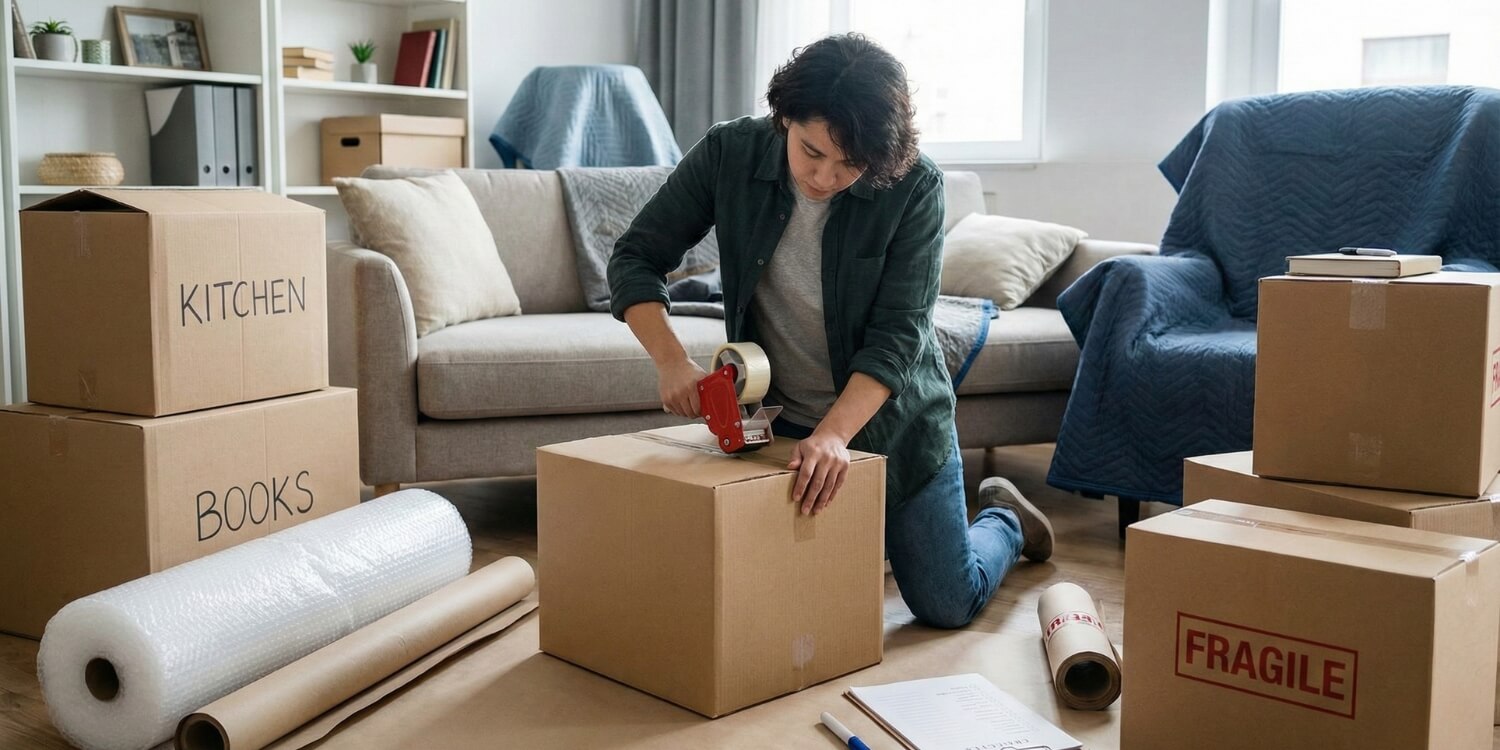
- Label each box with your name, the room it belongs in and a description of its contents.
- While plastic boxes may seem sturdy, cardboard moving cartons with securely taped tops work better.
- Avoid overstuffing boxes.
To help ensure your items stay safe during transportation, your STI moving professionals will inspect your packed boxes to check for any risk of damage. If a box is not packed properly, you may be asked to repack it—just to be on the safe side.
DIY Electronics Packing
If you still have the original packaging for your computer components or flat-screen TV, that’s ideal. If not, here’s what to do:
- Pack the item in a sturdy carton lined with styrofoam “peanuts” or crumpled newsprint. Seal the carton securely and label it “Extremely Fragile.”
- Label all wires and cables so you remember where they belong, making reassembly easier.
- Remove ink and toner cartridges from printers.
- Detach loose parts such as paper trays and feeders from printers.
- Back up your computer files to the cloud or onto DVDs.
Don’t Pack That!
Just because you own an item doesn’t mean it should move with you. Certain hazardous materials can put your belongings and other people at risk. Do not pack flammable liquids or solids, compressed gases, explosive items, oxidizers, corrosives, poisons or radioactive materials. Some common examples include:
- Nail polish remover
- Automotive repair and maintenance chemicals
- Radio-pharmaceuticals
- Matches
- Paints and paint thinners
- Lighter fluid
- Gasoline
- Fireworks
- Oxygen bottles
- Propane cylinders
It’s also not a good idea to pack family photos, firearms, prescription medications you’ll need in the next few days, food in glass jars or other perishable items for transport in the moving van. It’s better to keep these items with you and carry them yourself.
Best Practices for Labeling
Label every carton—no exceptions. Use a wide, felt-tip permanent marker (and keep several on hand). Clearly mark each box with the room it belongs to, its contents and “FRAGILE” or “THIS END UP” when needed, along with your bill of lading number if you have one.
To make things easier for yourself, you may want to label boxes with numbers or codes such as 1A, 1B and so on, to indicate which boxes should be unpacked first at your new home.
Pro Packing Tips
With more than 22 years of experience in the moving industry, STI has perfected the moving process. We’d like to share some of our best DIY packing tips to help ensure your belongings arrive safely:
- Keep matching pairs and similar items packed together.
- Coil electrical cords and cables neatly so they don’t hang loose or get caught.
- Place screws and other small hardware in labeled plastic bags and tape or tie them to the item they belong to.
- Don’t let items damage each other—avoid packing fragile china teacups with heavy items like cast-iron frying pans.
- Pack boxes in layers, placing a sheet of cardboard or crumpled paper between layers.
- Use towels and blankets for extra padding and cushioning.
- For very fragile items, pack them in individual small boxes first then place those boxes inside a larger box with plenty of padding.
- A box is packed correctly when it can be taped shut securely with the lid lying flat, without bowing inward or outward.
- Seal each carton tightly with tape, except for those that must remain open for inspection.
We hope these tips help you pack more safely and efficiently for your upcoming move. Be sure to contact STI for any packing cartons, other materials you may need, as well as transportation services.