
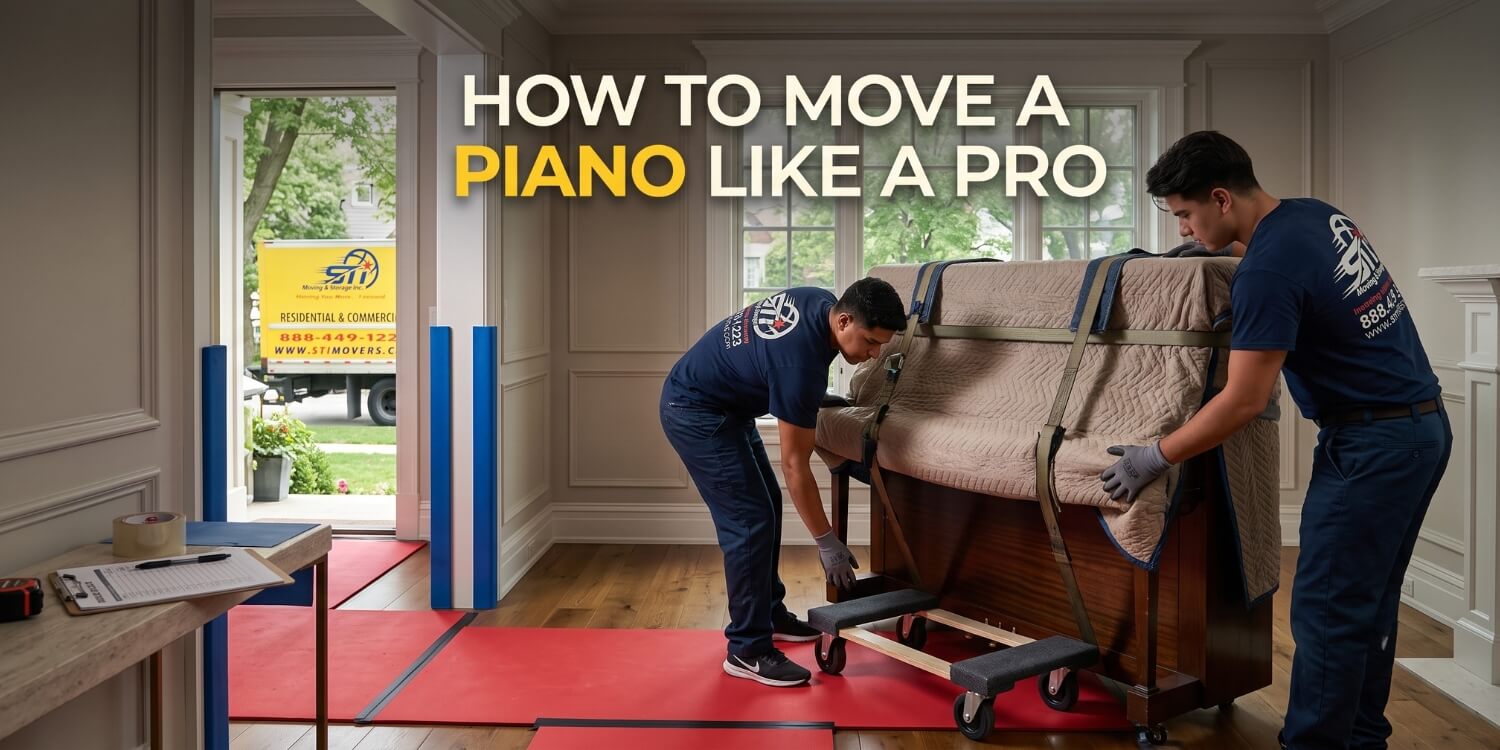
Moving day is almost here and one big question is probably on your mind: How can you move a piano by yourself?
The good news is that you can move an upright piano or a grand piano on your own. However, it takes careful planning and the right preparation. Read this guide to learn more.
What Makes Moving a Piano Difficult?
It’s completely normal to worry about moving a piano by yourself. Here are a few reasons why:
- A Piano is not Regular Furniture: A piano is a musical instrument, not just another piece of furniture, so it needs extra care when moving.
- You Need Special Equipment: Moving a piano safely usually requires tools like skid boards and piano dollies.
- Pianos are Very Heavy: A piano is often one of the heaviest items you’ll have to move.
- They Have an Unusual Shape: Pianos are bulky and their weight is not evenly balanced, which makes them harder to carry and move.
Moving Upright Pianos vs. Grand Pianos
Each type of piano needs a different way of moving. Here are some tips if you’re planning to move one yourself.
Upright Pianos
Upright pianos are smaller than grand pianos and have built-in wheels (casters), so they are usually easier to move. However, moving one up stairs or through narrow hallways can still be challenging.
Grand Pianos
Grand pianos are too large to fit through a standard doorway. Their legs usually need to be removed before moving them through a door. The piano lid should also be securely strapped closed to help prevent damage during the move.
How Much Do Pianos Weigh?
The weight of a piano depends on its type and model. Some grand pianos can weigh as much as 1,400 pounds, while others weigh around 500 pounds. An upright piano usually weighs between 300 and 800 pounds.
How to Move a Piano
Before you start moving a piano, make sure you have the right tools and enough people to help. This will make the job safer and easier.
What You’ll Need
- Moving blankets – To protect the piano from scratches and damage
- Moving tape – To keep the blankets securely in place
- Moving dolly – To help move the piano without lifting all of its weight
- Piano skid board (for a grand piano) – Used to move a grand piano safely
- Straps – To hold the piano securely while moving
- Screwdriver – Needed if you have to remove parts, such as the legs of a grand piano
- At least four people – A piano is very heavy, so you need enough people to move it safely
How to Prepare Before Moving Your Piano
Before moving your piano, take a few minutes to get everything ready. This can help make the move safer and smoother.
- Clear doorways and hallways so the piano can pass through without any obstacles.
- Pull out the moving van ramp before loading the piano into the truck.
- Measure doorways, staircases and other tight spaces to make sure the piano will fit.
- Open all doors along the moving path to avoid stopping while carrying the piano.
- Protect floors and doorways with bumpers or towels to help prevent scratches and damage.
Moving an Upright Piano Step by Step
Follow these steps carefully to move an upright piano safely and reduce the risk of damage.
- Cover the piano with a moving blanket to protect it from scratches and bumps.
- Use moving tape to keep the blanket securely in place while moving.
- Have one person stand at each corner of the piano. Lift it carefully and place it onto the moving dolly. Make sure everyone bends their knees while lifting to help avoid back injuries.
- Slowly roll the piano to the moving van. Each helper should stay at their corner to keep the piano balanced and steady during the move.
Moving a Grand Piano Step by Step
A grand piano needs extra care because of its size and design. Follow these steps to move it safely.
- Close the piano lid before moving it.
- Use a screwdriver to remove the legs and pedals. Make sure a helper supports the piano while doing this to prevent it from falling.
- Secure the piano lid with a strap so it stays closed during the move.
- Cover the piano with moving blankets and use tape to keep them in place.
- Carefully lift the piano onto the skid board.
- Use straps to secure the piano to the skid board.
- Slowly move the skid board to the moving van. Have one helper at each corner to keep the piano steady and help guide it safely.
Securing a Piano Inside a Moving Truck
After loading the piano into the moving truck, make sure it is properly secured before you start driving.
- Use ratchet tie-down straps to fasten the piano to the truck’s rub rails so it stays in place.
- Put furniture pads between the piano and the side of the truck to help protect it from scratches and bumps.
- Keep heavy boxes and furniture secure and away from the piano to prevent damage during the trip.
When you reach your new home, follow the same steps in reverse. Place the piano on the dolly or skid board, carefully move it inside and reattach the legs if they were removed.
Moving a piano takes careful planning, the right equipment and safe lifting techniques. Although you can move it yourself, hiring professional movers is often the safer choice. They have the experience and proper tools to move your piano safely while reducing the risk of damage or injury.
What to Do After Moving a Piano
Congratulations! Your piano is now in its new home.
After the move, it may have some dust or dirt on it. Wipe it gently with a damp cloth to clean the surface. Then, let the piano sit for about a month before booking a professional tuning. This gives the piano time to adjust to its new environment and helps keep it in good condition and properly tuned for years to come.

FAQs
How do you move a piano downstairs?
Moving a piano downstairs requires strong straps, a piano board, protective blankets and several trained helpers. The piano must remain balanced and controlled at every step. Because one slip can cause serious injury or damage, hiring professional piano movers is the safest choice for stairs.
How do you move a piano yourself?
First, measure the piano, doors and moving path. Wrap the piano in moving blankets, secure it with straps and place it on a strong piano dolly. Never lift it by its legs. You should not attempt the move completely alone because pianos are extremely heavy and unbalanced.
How do you move a piano upstairs?
Use a piano skid board or stair ramp, heavy-duty straps and at least four capable helpers. Move slowly, keep the piano balanced and have one person guide the team. Professional movers are strongly recommended, especially for grand pianos or narrow staircases.
How much does it cost to move a piano?
Professional piano moving usually costs between $200 and $1,000, with an average price of about $400. The final cost depends on the piano’s size, weight, distance, stairs and narrow spaces.
How many people are needed to move a piano?
An average upright piano usually requires at least four people. A grand piano, staircase or difficult moving path may require a larger and more experienced team.
How do you move a piano across a room?
Clear the path and protect the floor first. Carefully lift the piano onto a strong furniture or piano dolly, then roll it slowly across the room. Do not push it on its small built-in casters because they may damage the floor or break under pressure.
How much should you tip a piano mover?
Tipping is optional but appreciated for good service. A common amount is $20 to $50 per mover, or around 5% to 10% of the total bill. You may give more when the movers handle stairs, bad weather or a difficult move.