
Key Takeaways
- Before packing your car, sort your items into what will travel with you and what the movers will handle. Prioritize essentials, valuables and anything movers typically won’t transport, such as personal documents or perishables.
- Plastic bags, especially vacuum-seal bags for soft items, often work better than boxes in a car because they’re more flexible and help you make better use of irregular spaces.
- Heavy items should be placed on the bottom and the weight should be distributed evenly throughout the vehicle, as an unbalanced load can affect handling, fuel efficiency and tire wear.
- Once packed items reach window level, the car is considered full. Keeping all windows clear is essential for safe visibility while driving.
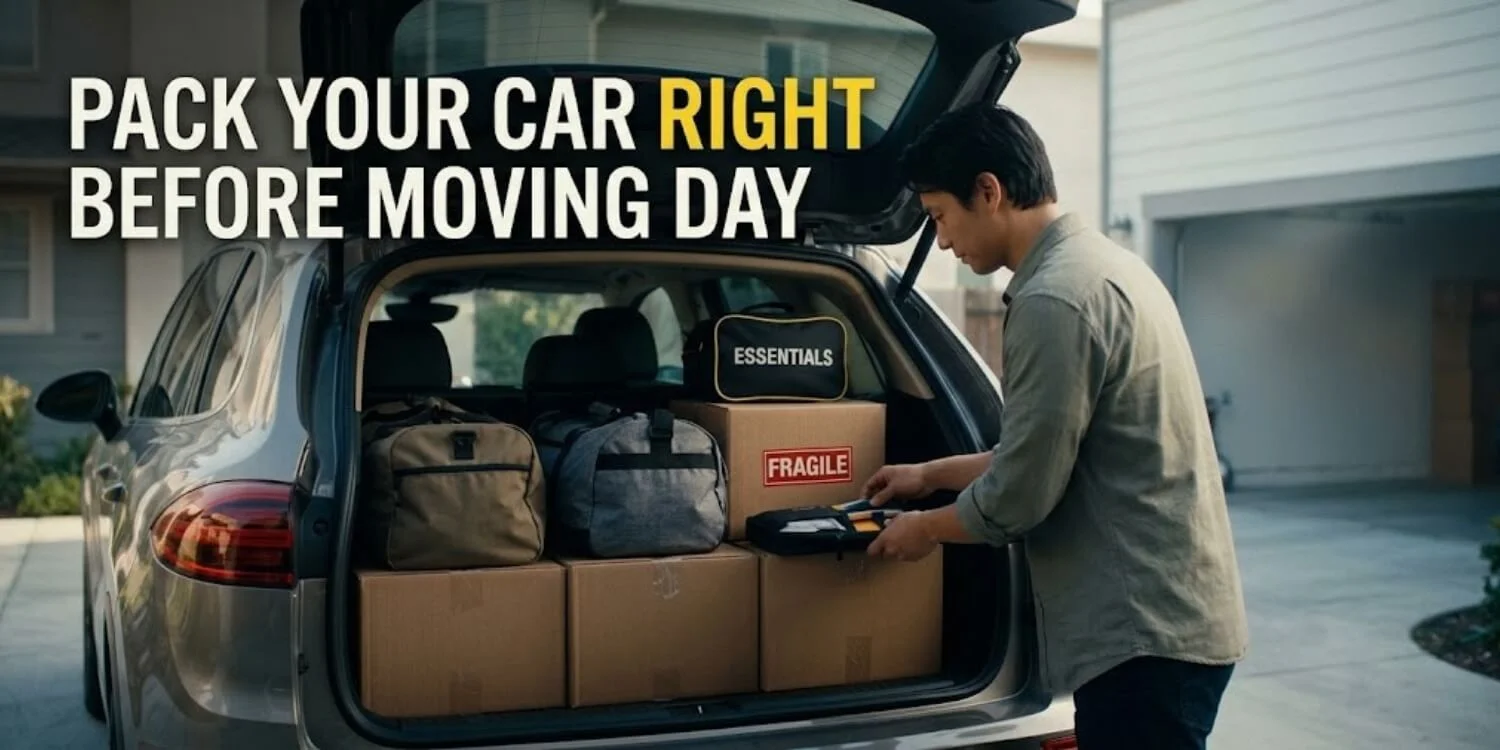
Knowing how to pack your car when moving is trickier than it may seem. You need to make the most of limited space while also protecting your belongings and keeping the trip as safe as possible. Whether you’re hiring movers or transporting everything on your own, follow these tips to get the most out of your vehicle.
Sort Your Items
Before you start packing, sort through your belongings and decide what you want to bring with you and what you want to leave for your moving company. You may want to set aside items movers typically won’t transport, such as jewelry, personal documents, family heirlooms and important paperwork, including your moving estimate. Keep hazardous or perishable items out of the car, such as food, bleach and fireworks. If you’re handling the move on your own, focus on the bare essentials — the items you know you’ll need right away in your new home.
If you’re moving long distance, bring along a few essentials you’ll need when you arrive, such as cleaning supplies, extra clothes, bedding and toiletries (toothbrush, toothpaste, soap, shaving cream, sunscreen, deodorant, comb, razor, etc.). Snacks and entertainment are also a good idea to help make the long drive more comfortable. Pets and plants which need to be transported in a safe environment, should travel with you in your car.
Clean Out Your Car
Cars tend to accumulate odds and ends over the years — everyday items that can take up valuable space. Since you’ll need every square inch inside your vehicle, remove everything from your car before you begin packing, even items you know you’ll be bringing with you, such as a toolbox or road emergency kit. When you repack, you’ll likely need to place them in a new location, either to make room for other belongings or to ensure they aren’t buried or difficult to reach.

Use Plastic Bags Instead of Boxes
While plastic and cardboard boxes are common in the moving industry, they’re not always the best choice for your car. They take up too much space and their rigid shape can make it difficult to fit other items around them. Plastic bags, on the other hand, help keep your belongings organized while remaining flexible, allowing you to make better use of the available space. Choose durable, heavy-duty plastic bags that are at least two millimeters thick so they can handle wear and tear. You may also want to use vacuum-seal bags for soft items such as clothing, bedding and pillows, since they compress bulky materials and make them easier to fit into the small spaces and corners of your car.
Pack Essential Items First
When sorting your belongings, arrange them based on importance. Load the items you absolutely need first, then add the things you’d simply like to bring. Otherwise, you may end up unloading the entire car and starting over after realizing there’s no room for something essential. Heavy items should be placed on the bottom of your car, with lighter items on top. This not only helps protect your belongings but also keeps you and your passengers safer. If the car comes to a sudden stop, you don’t want heavy objects flying over the seats.
Use Every Space You Can
Make use of every available space in your car: the trunk, back seats, passenger seat, footwells, glove compartment, map pockets, back seat pockets, under the seats and even the spare tire cavity if there’s enough room. The only area that should remain off limits is the driver’s footwell, where loose items could interfere with operating the vehicle.
Use Clothes and Blankets for Padding
Bubble wrap is strong and reliable but it can take up a lot of space. Kill two birds with one stone by using blankets, pillows and clothing to protect fragile items. Layering these around delicate belongings helps cushion them from bumps and turns, and since you’re already bringing them with you, it also saves you from using extra packing materials and doing additional work.
Keep Your Windows Clear
There is a limit to how much you can safely transport in your car, both in terms of weight and space. Once your bags and boxes reach window level, the car is considered full. This includes both the rear and side windows. You need a clear, unobstructed view while driving so you can stay aware of everything happening around you at all times.
Distribute Weight Evenly
Don’t place all of your heavy items in one area of the car. Spread them out so the weight is distributed evenly throughout the vehicle. An unbalanced car can be more difficult to control, especially when turning or cornering. It can also reduce fuel efficiency and put extra strain on your tires and suspension.

Help Moving Long Distance
Knowing how to pack your car when moving is a great way to save money, especially during your first move. For most moves, however, your car probably won’t be enough. You’ll need a team of professional movers who can safely load and handle large, heavy and delicate items.
STI Moving & Storage Services coordinates thousands of interstate moves every year. Our team can help with every part of the process, from packing and loading to storage solutions. No matter how big the challenge may be, we’re here for you. Contact us today for a free, customized quote!


